Vancouver Laneway House Interior Design: How to Make a Small Footprint Feel Like a Real Home
Vancouver laneway houses are one of the most interesting design challenges I work with.
You've got a tight footprint - usually 500 to 700 square feet - a space that needs to function as a complete home, and an owner who typically cares deeply about how it looks and lives. That combination is either a designer's nightmare or a designer's playground, depending on how you approach it.
Done right, a well-designed laneway doesn't feel small. It feels exactly right-sized.
Here's how to think about interior design for a Vancouver laneway house - from layout decisions that happen before the walls go up, to the finish choices that make or break the end result.
Get the Layout Right Before You Furnish Anything
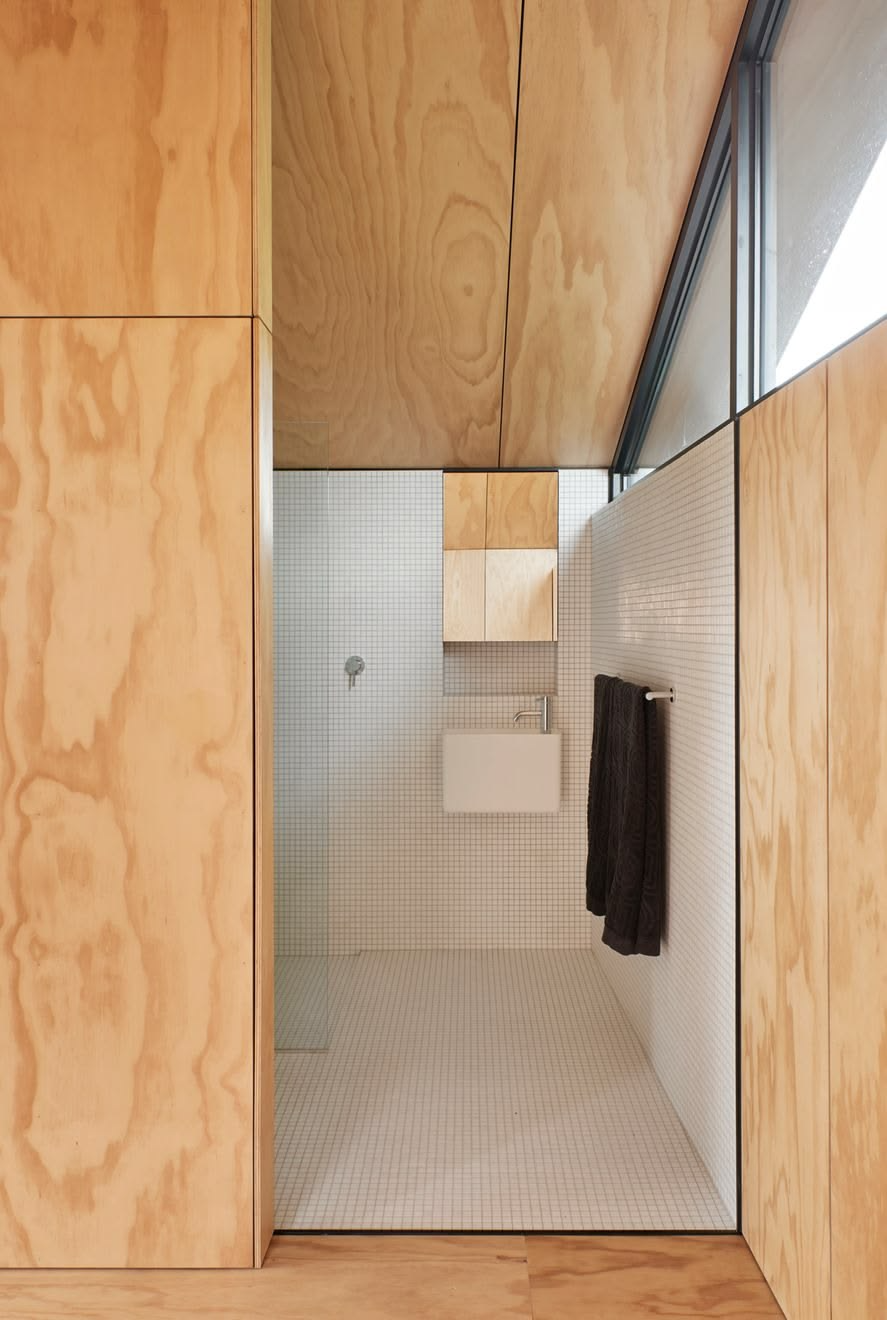
The most important interior design decisions in a laneway house happen before a single piece of furniture is chosen. Traffic flow, window placement, the relationship between kitchen and living - these are set in the build phase, and they're very hard to fix after the fact.
If you're still in the planning or construction stage, push hard for an open-concept main floor. In a laneway, walls between living, dining, and kitchen eat square footage you can't afford to lose. A kitchen that opens directly to the living area creates a space that feels twice its actual size, and it makes the home work better for how people actually live - cooking, talking, watching something, all in the same connected zone.
The bedroom and bathroom are the exception. These need walls. But everything else should flow.
If you're already built out and working with a fixed layout, the question becomes how to define zones without closing them off. Rugs, lighting placement, and furniture arrangement can do a lot of that work without adding a single partition.
Photo Source: Pinterest.com
Skylights Are the Highest-ROI Design Move in a Laneway
Natural light is the single most powerful tool in a small space, and laneways are often shaded by the main house behind them, neighbouring fences, or mature trees. A single fixed skylight over the kitchen or living area can deliver more light than an additional window on a north wall - and it transforms the feeling of the space.
If you're building or renovating, budget for at least one skylight. A fixed unit runs $1,500–$3,500 installed; operable runs $3,000–$6,000. That's real money in a tight laneway budget, but the impact is disproportionate. A bright laneway house doesn't feel like a coach house. A dim one always does.
For spaces already built without great natural light, the strategy shifts to layered artificial lighting. That means ambient light (ceiling or track), task light (under-cabinet, desk, bedside), and accent light (a lamp, a pendant, a strip behind a shelf). Three layers. Not one overhead fixture doing everything. A single overhead pot light in a small space makes it feel like a rental. Layered light makes it feel designed.
Built-Ins Are Not Optional - They're the Structure of the Space
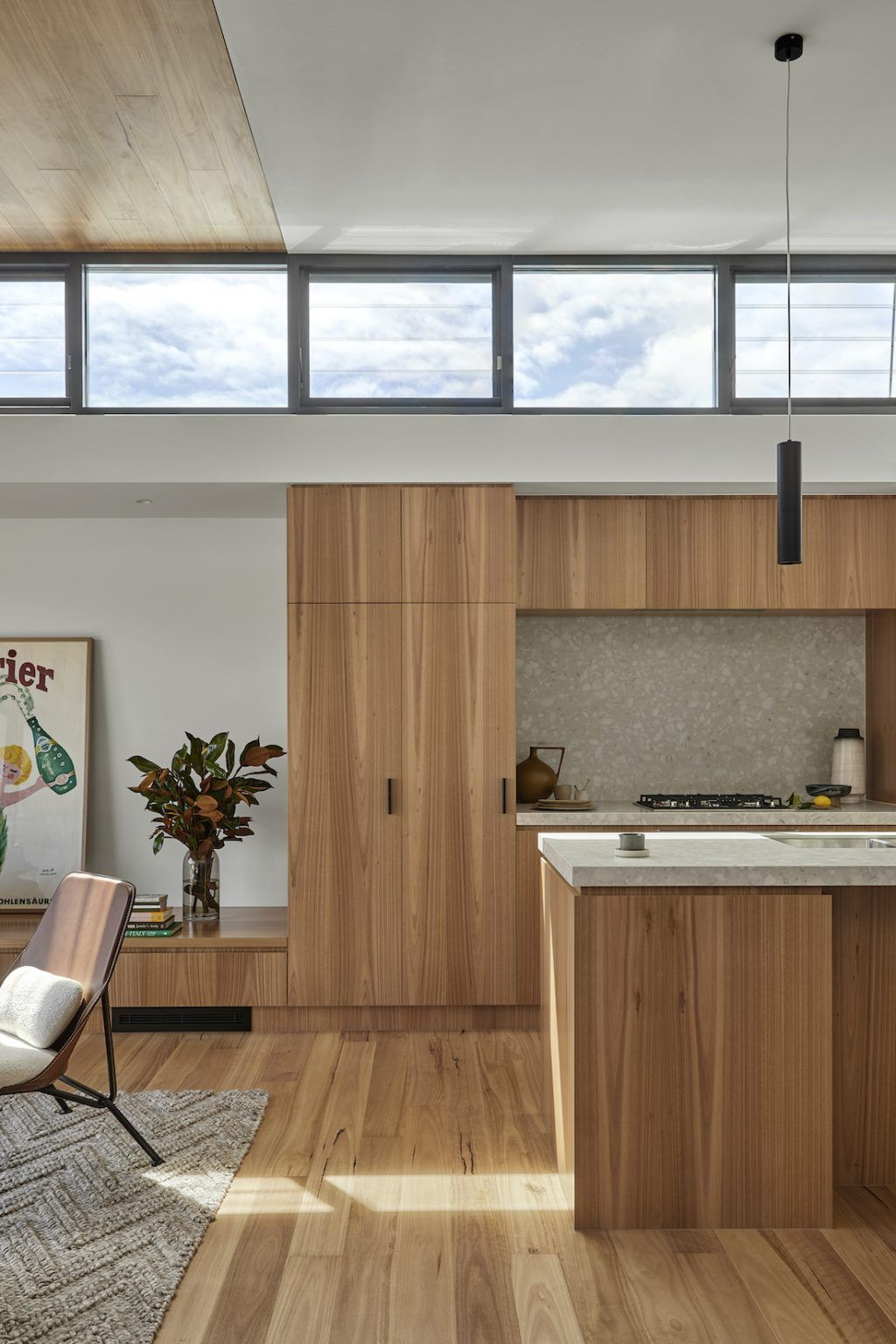
In a laneway house, storage doesn't happen by accident. You have to build it in, literally. Custom built-ins - whether that's a full wall of cabinetry in the living room, a banquette with drawers in the dining area, or a bed frame with integrated storage - are what keep a small space from feeling cluttered and chaotic.
The goal isn't to maximize storage square footage. It's to eliminate visual noise. When everything has a dedicated home and surfaces stay clear, a 600-square-foot laneway reads as calm and considered rather than cramped.
In my experience with small Vancouver spaces, the kitchen is where built-ins pay off most. Full-height cabinetry to the ceiling, a pantry cabinet that replaces a walk-in, a kitchen island that doubles as a dining table - these decisions make a laneway kitchen genuinely functional without sacrificing the openness of the main floor.
Photo Source: Pinterest.com
Choose a Tight Material Palette and Stick to It
In a large home, you can get away with variation - a different tile in the powder room, a different floor finish in the bedroom. In a laneway house, visual consistency is what makes the space feel cohesive rather than chopped up.
Pick your palette before you pick your products. A laneway that commits to warm wood tones, matte white cabinetry, and a single stone or tile used in both the kitchen and bathroom will always look more intentional than one where each room made its own decisions.
West Coast Modern works particularly well in Vancouver laneways - natural materials (wood, stone, linen), a neutral base with warmth in the texture rather than the colour, and clean lines that don't compete with the architecture. It's a palette that ages well, photographs well, and doesn't need to be updated every five years.
For paint, keep it simple. One wall colour for the entire main floor. A consistent trim colour. Save any colour moments for accents - a single chair, a set of cushions, an art piece. When everything else is consistent, a single bold element reads as intentional rather than chaotic.
Furniture Scale Is Where Most Laneway Designs Go Wrong
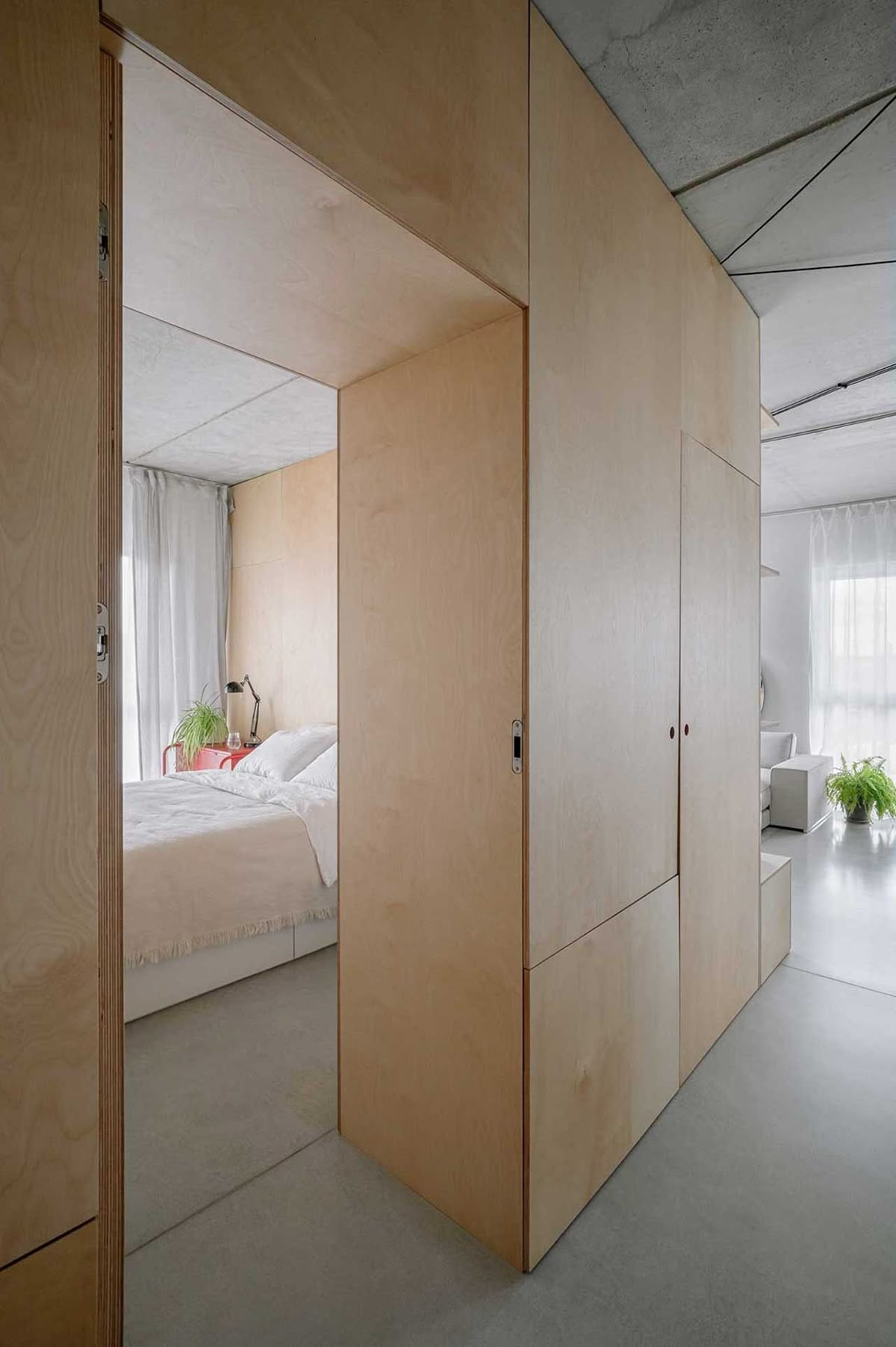
The most common mistake in a small space is buying furniture that's too small, in the belief that smaller furniture makes a room feel bigger. It doesn't. It makes it feel cheap and fussy.
A single large sofa in a laneway living area reads better than two small loveseats. One generous dining table reads better than a small bistro table and four chairs that look like they belong on a patio. The trick is choosing pieces that are scaled to the space - not miniaturized versions of normal furniture.
What to actually look for: furniture with legs (visual lightness), pieces that serve double duty (a daybed that works as a sofa, an ottoman with storage, a desk that folds away), and a sofa in a light or neutral fabric that doesn't visually shrink the room. Avoid dark, heavy upholstery on large pieces in a laneway - it compresses the space in a way that's hard to fix with anything else.
For Vancouver laneway houses specifically, also think about indoor-outdoor flow. If you have a small patio or outdoor deck, treat it as an extension of the living space - matching or complementary materials, outdoor furniture scaled like indoor furniture, lighting that runs from inside out. A connected outdoor space can effectively add another "room" to a 600-square-foot home.
Photo Source: Pinterest.com
Frequently Asked Questions
Q: How much does it cost to furnish and design a Vancouver laneway house?
A full interior design and FF&E package for a laneway house typically runs $15,000–$45,000, depending on scope, quality level, and whether custom millwork is involved. E-design packages - where you get a design plan, material selections, and sourcing direction you implement yourself - are a more accessible option and work well for laneway houses with straightforward layouts.
Q: Do I need a designer for a laneway house, or can I DIY it?
You can DIY it, but the risk is higher than in a larger home. Every decision in a small space has more impact - a wrong sofa, a cluttered layout, or a disjointed material palette is harder to recover from when there's nowhere else for the eye to go. A one-time design consultation or an e-design package can save you from expensive mistakes, even if you handle all the sourcing and implementation yourself.
Q: What design style works best for a Vancouver laneway house?
West Coast Modern is the most harmonious fit - warm neutrals, natural materials, clean lines, and an indoor-outdoor connection that suits Vancouver's climate and laneway architecture. It's also a style that photographs well if you're using the laneway as a rental or listing it.
Q: Can I use the same tile in the kitchen and bathroom of a laneway house?
Yes - and in most cases you should. Using the same tile (or at minimum the same grout colour and finish) across both wet areas creates visual continuity that makes the home feel larger and more intentional. It also simplifies ordering and reduces the risk of material clashes.
—Samena, HART HOUS
Designing a Vancouver laneway house well takes a different kind of thinking than a full-size home - but the result, when it's right, is one of the most satisfying projects there is.
Every decision matters, and nothing is wasted.
If you're in the planning stage or just moved into a new laneway and aren't sure where to start, the HART HOUS e-design package was built for exactly this.
Flat fee, clear deliverables, done remotely - so you get a professional design direction without the full-service price tag.