How to Design a West Coast Modern Kitchen in Vancouver
Every second kitchen project inquiry I get mentions "West Coast Modern." Which makes sense - it's the look that fits Vancouver and the Island better than anything else. Warm materials, clean lines, a quiet connection to the landscape outside the window.
The problem is that most people can't tell you what it actually requires. They have a mood board full of white oak and stone and matte black hardware, and then they hand it to a contractor who builds something adjacent to it - and three years later the kitchen feels off, and they can't explain why.
So let's actually talk about what makes this aesthetic land. And what kills it.
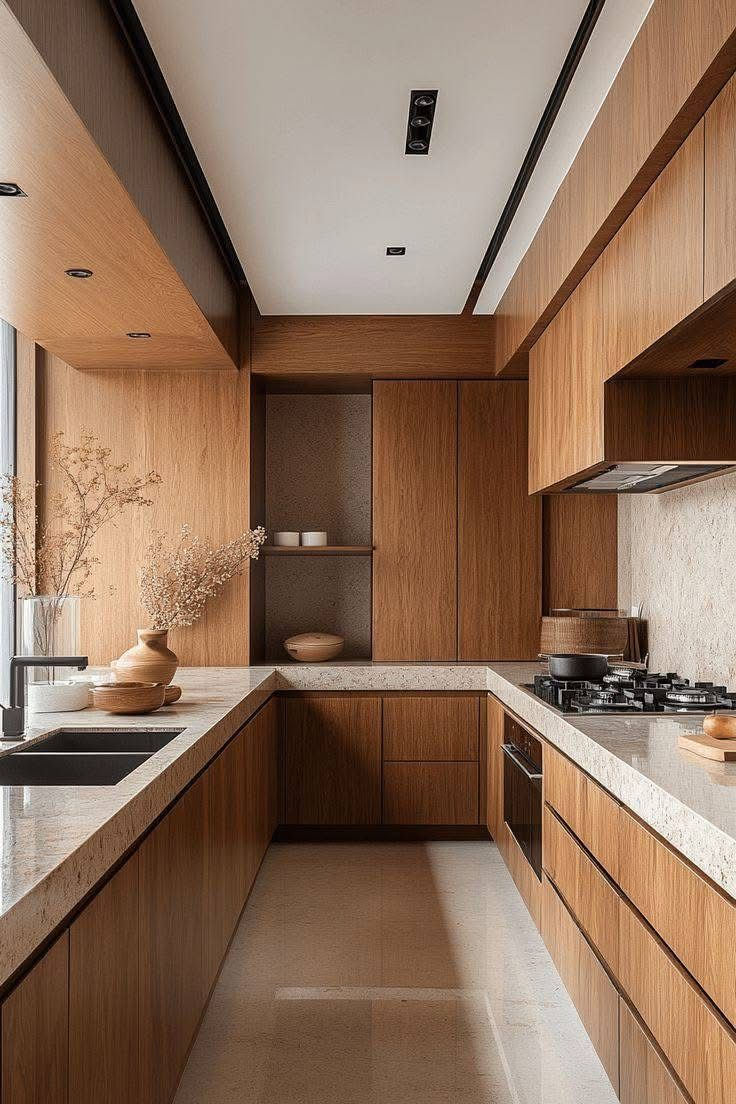
What West Coast Modern is - And What it Isn't
West Coast Modern is not minimalism. It's not Japandi, even though they share some surface-level DNA.
It's a specific material language rooted in the Pacific Northwest: real wood, natural stone, metal that patinas, and a colour palette that borrows from the landscape outside your window rather than from a trend cycle.
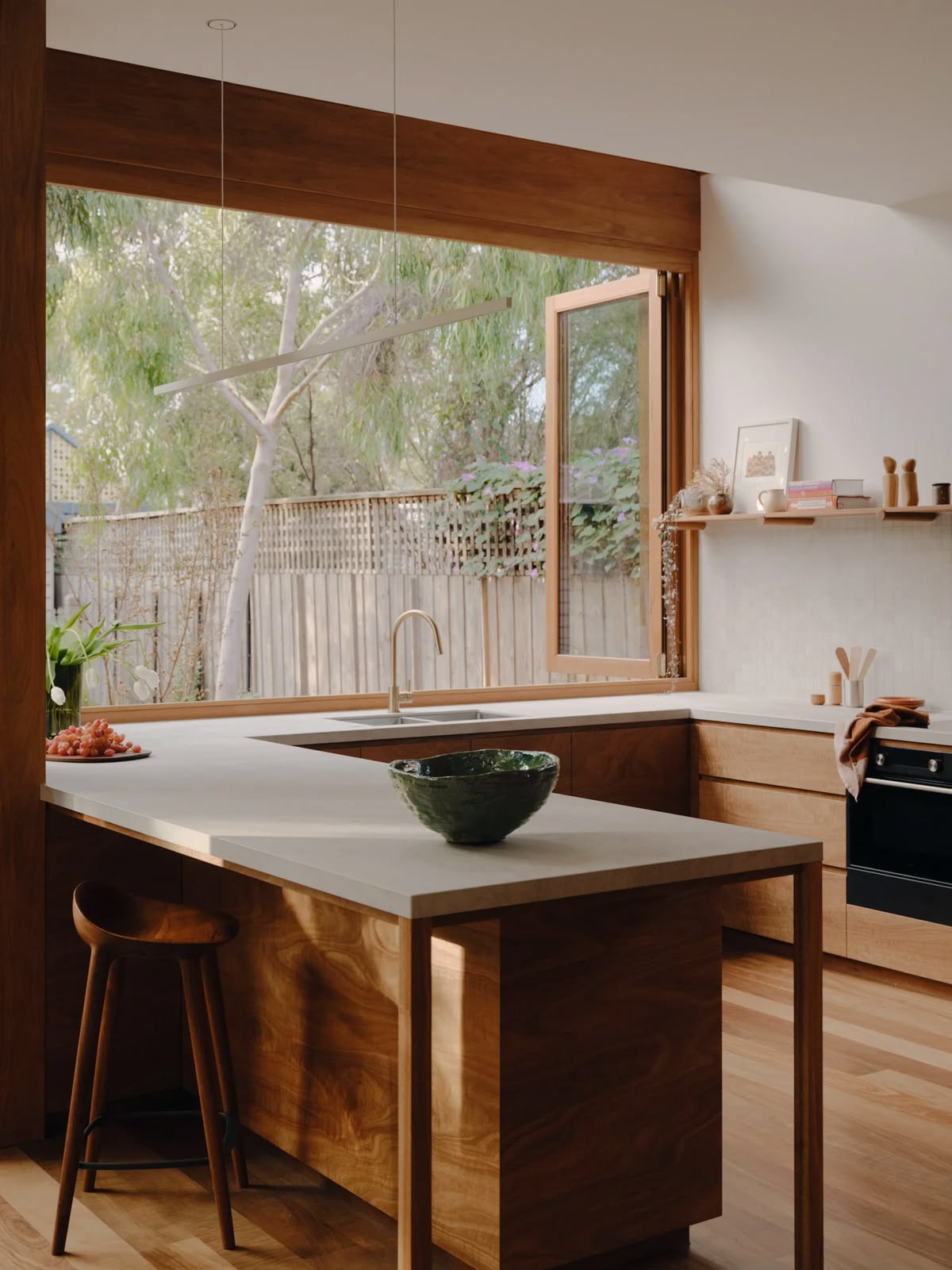
It's warm but not rustic. Clean but not cold. The connection to the outdoors is intentional - sight lines to the garden matter, natural light is non-negotiable, and nothing about the space should feel like it could exist anywhere else.
Where people go wrong is treating it as a collection of individual material choices rather than a system. You can't pull the white oak cabinets into a cool-toned, high-gloss kitchen and call it West Coast Modern. Everything has to speak the same language.
Photo Source: Pinterest.com
The Cabinetry Question
White oak is the defining cabinet material of this aesthetic right now, and it's earned that. The grain is linear without being aggressive, the tone warms without going orange, and it works with almost every stone and paint colour in the West Coast palette.
Rift-cut white oak specifically - where the wood is cut to emphasize the straight linear grain rather than the figure - is what I specify most often for a refined result. It reads more architectural than flat-sawn, and it's the detail that separates a kitchen that looks intentional from one that just looks like "wood cabinets."
If you're going painted, the palette is narrow: deep olive, warm charcoal, off-white, or muted sage. The undertones must pull warm. Cool grey reads as a different story entirely and will fight everything else in the room.
Two-tone works well here - wood lowers with painted uppers, or a painted perimeter with a wood island - but only if the combination was decided on, not arrived at by accident.
Stone and Countertops
Quartzite and leathered granite are doing the most work in this category right now.
Leathered finishes - where the surface is textured rather than polished - feel tactile and lived-in in a way that high-gloss stone doesn't. They also hide fingerprints and scratches in a way that matters in a kitchen that actually gets used.
Honed Calacatta marble still appears, but selectively. I'll specify it on an island where it can develop a patina over time. On perimeter counters in a busy family kitchen, it becomes a maintenance project within six months.
Avoid ultra-white quartz with artificial veining. It photographs beautifully and dates quickly. In three years, it will look exactly like what it is: a 2020s trend decision.
Photo Source: Pinterest.com
Hardware And Fixtures - Where The Finish Has to Commit
Matte black or unlacquered brass. Those are the two finishes that belong in a West Coast Modern kitchen. Occasionally brushed nickel in a very specific application, but it has to be intentional.
The finish has to be consistent across hardware, plumbing, and lighting. Mixing metal tones dilutes the whole room. I've walked into kitchens with beautiful cabinetry and stone where the polished chrome faucet and satin nickel hardware and matte black pendants are all fighting each other - and that's the reason the space feels unresolved despite the budget that went into it.
For pull profiles, long linear bar pulls at 128–160mm read correctly for this aesthetic. Anything with decorative detail or curved shaping belongs in a different story.
The kitchen faucet is a detail that consistently punches above its weight visually. An architectural silhouette - bridge faucet, clean gooseneck, minimal single-lever - in the right finish will do more for the overall feel of the kitchen than most people expect.
The Backsplash is Where This Kitchen Usually Loses The Plot
The temptation is to use the backsplash as a statement - the bold tile moment, the pattern element, the thing that "adds interest."
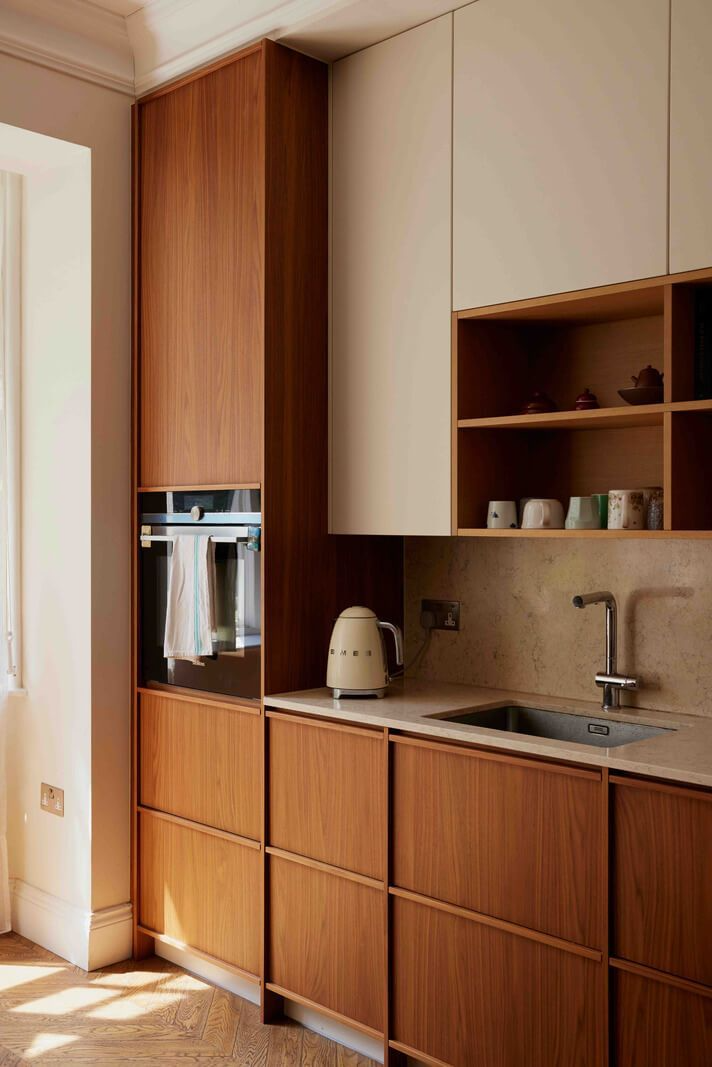
In a West Coast Modern kitchen, the backsplash should extend the material palette, not depart from it.
What works: a full-height stone slab running counter to the upper cabinet (this is the most West Coast move you can make), large-format honed porcelain in a format that emphasizes the horizontal, or fluted tile in a complementary tone.
What doesn't work: subway tile (too residential, generic for this aesthetic), bold Zellige patterning (it belongs in a different kitchen), and anything that's clearly trying to be the focal point of the room. The materials in a West Coast Modern kitchen earn attention quietly. Nothing should be shouting.
Photo Source: Pinterest.com
What Does a West Coast Modern Kitchen Actually Cost in Vancouver?
A genuine version of this aesthetic - rift-cut oak cabinetry, natural stone counters, proper hardware, and detail work that holds up - starts around $80,000 for a mid-size kitchen in Metro Vancouver or on the Island.
At $120,000+, you're getting custom millwork, full-height slab backsplash, integrated panel appliances, and the kind of execution where nothing looks like it came from a showroom floor.
Budget pressure shows up first in cabinetry - people compromise on the wood species or door profile to free up money elsewhere, and then the rest of the material selections don't land the way they should. If you have to triage, protect the cabinetry budget. The stone and hardware can be refined over time. The bones can't.
Frequently Asked Questions
Q: Can I get the West Coast Modern look without a full renovation?
To a degree. Hardware swaps and paint updates can move the needle, but the full effect requires the cabinetry and stone to be working together. Partial updates tend to highlight what's missing rather than create the aesthetic.
Q: White oak cabinets - painted or stained?
Both work, but the stained natural wood finish is more distinctly West Coast. Painted cabinets in warm charcoal or olive read as West Coast Modern when the stone and hardware are right - but you lose some of the warmth that defines the aesthetic at its best.
Q: Do I need an interior designer for a kitchen renovation in Vancouver?
A contractor builds what you tell them to build. A designer figures out what you should actually be building - layout, the workflow, the material system, and how it all integrates with the rest of your home. Kitchen renovations are where design errors are the most expensive to fix. The earlier a designer is involved, the fewer costly changes get made mid-construction.
West Coast Modern is one of the most requested looks in Vancouver right now, and one of the most misexecuted.
Not because it's complicated - it isn't - but because it requires every element to be working toward the same result. One wrong finish, one material that pulls cool when everything else pulls warm, one hardware choice that doesn't commit - and the whole thing feels off in a way that's hard to name but impossible to ignore.
If you're planning a kitchen renovation in Vancouver or on Vancouver Island and want to talk through what your kitchen actually needs, that's what the discovery call is for.
No obligation, no pitch - just a real conversation about your space.