West Coast Modern Kitchen Design in Vancouver: What it Actually Takes
Vancouver's best kitchens don't look like they were pulled from a showroom. They look like someone actually lives there - and thought hard about how.
West Coast Modern is the aesthetic that gets this right most consistently: warm materials, clean structure, honest surfaces, and a total lack of fuss. It's not minimalist for the sake of minimalism. It's not rustic either. It's something specific to this coast - the way light moves through a Kitsilano character home in the afternoon, or the way cedar grain sits against concrete in a Fraser St. condo.
Done well, it's the most livable design language on the planet. Done badly, it's just a lot of white oak and disappointed clients.
Here's what it actually takes to pull it off in a Vancouver kitchen.
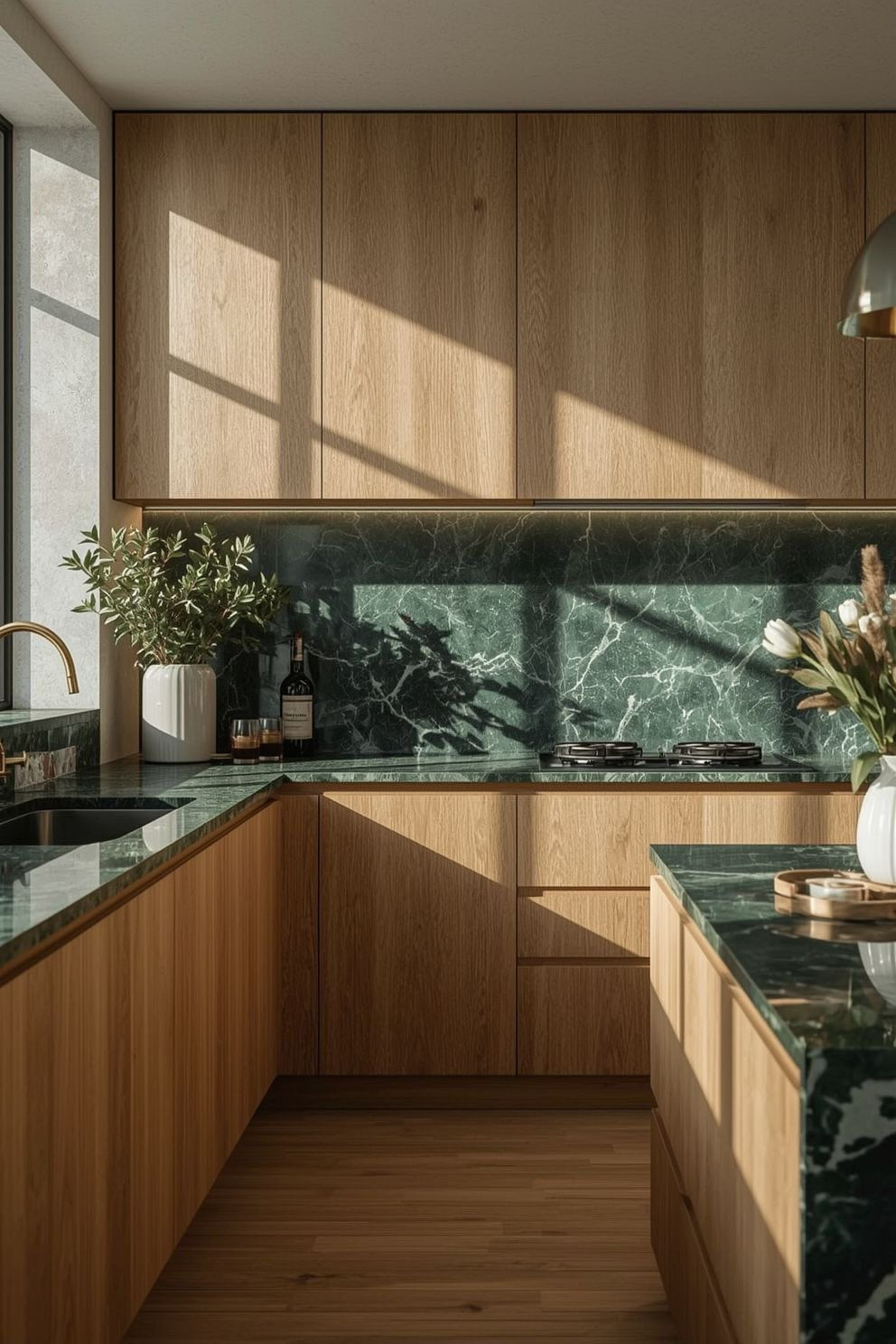
What is West Coast Modern design, exactly?
West Coast Modern isn't a formula. It's a material philosophy.
It draws from mid-century bones - clean lines, intentional negative space, form that follows function - but grounds it in the Pacific Northwest's natural palette: stone, wood, linen, slate.
The result is a kitchen that feels warm without being rustic, structured without being cold.
In Vancouver specifically, it tends to show up as:
- Flat-front or shaker cabinetry in warm whites, greige, or muted sage
- Slab stone countertops (quartzite, leathered granite, or honed marble)
- Hardware that's minimal but tactile - brushed brass, unlacquered bronze, matte black
- Natural wood accents - open shelving, a floating island leg, a hood wrap
- Backsplash that earns its place: zellige tile, large-format stone, or a full slab continuation
What it is NOT: stainless steel everything, glossy white subway tile, all-white cabinetry with chrome pulls, or anything that photographs the same in every house.
Photos Source: Pinterest.com
Why does this style work so well in Vancouver?
BC's climate shapes design more than most clients realize going in.
Humidity is real here. Materials need to handle it - which is why properly finished wood cabinetry, moisture-tolerant stone, and good ventilation aren't just aesthetic choices, they're practical ones. A gorgeous painted cabinet finish that bubbles and peels in two years because the kitchen wasn't spec'd for a coastal climate is not a West Coast Modern kitchen. It's an expensive lesson.
Vancouver homes also tend toward two extremes: older character houses (think 1950s additions in Cadboro Bay or East Van bungalows) and newer condo builds where every inch counts. West Coast Modern works in both - but the execution is completely different.
In a character home, you're working with awkward proportions, low ceilings, and original details worth keeping. In a condo, you're working with strata rules, constrained square footage, and shared building systems that limit what you can move. The aesthetic stays consistent. The decision-making behind it does not.
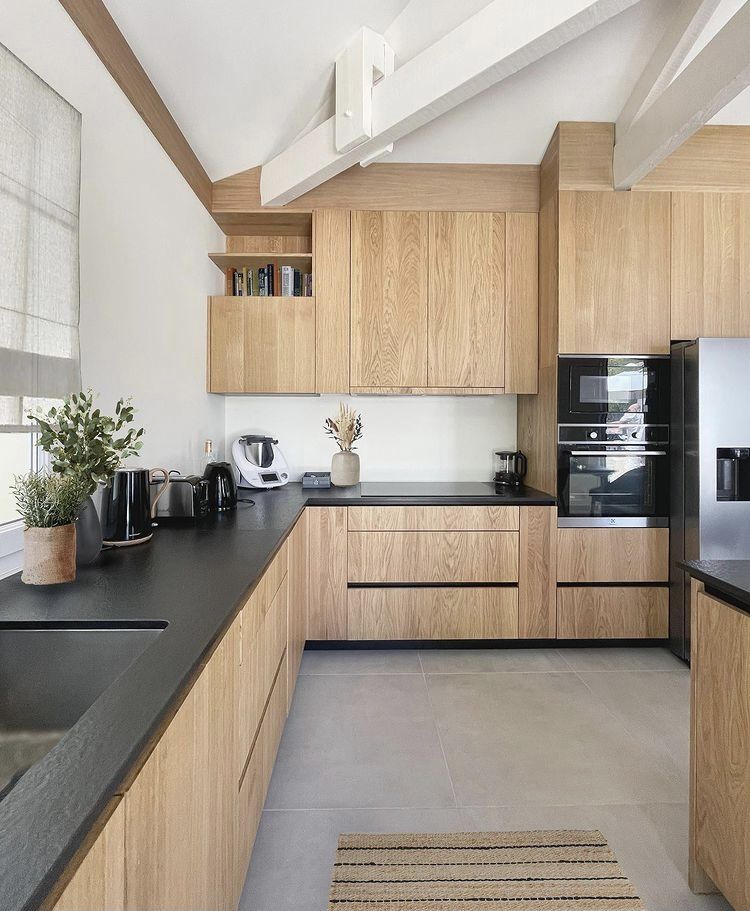
What does a West Coast modern kitchen actually cost in Vancouver?
Budget is always the conversation nobody wants to have until they're already three weeks into planning.
For a full West Coast Modern kitchen renovation in Vancouver, realistic ranges look like this:
Entry-level (cosmetic refresh, stock or semi-custom cabinetry, quartz counters): $25,000–$40,000
Mid-range (semi-custom millwork, stone counters, new appliances, minor layout changes): $45,000–$75,000
High-end (custom cabinetry, natural stone, full layout reconfiguration, integrated appliances): $80,000–$130,000+
Material sourcing is a real variable in BC. Natural stone often comes through Vancouver or Victoria distributors with lead times that can push a project by four to eight weeks. If you're committed to a specific slab - and in a West Coast Modern kitchen, you usually are - that timeline needs to be built in from the start, not discovered when your contractor is ready to install.
Photo Source: Pinterest.com
How do I know if my kitchen can actually pull this off?
This is the question worth asking before you fall in love with a finish palette.
West Coast Modern is less forgiving of structural shortcuts than some other styles. The aesthetic relies on visual calm - and visual calm breaks down fast if the layout doesn't support it. A cramped galley with no natural light will fight you on every finish decision. So will a poorly positioned island that blocks workflow, no matter how beautiful the stone is.
Before committing to any material selections, the layout has to work. That means understanding traffic flow, the kitchen's relationship to adjacent living spaces, how natural light moves through the room, and what your actual cooking and entertaining habits look like. The design has to fit the life, not the other way around.
On the Squamish main floor overhaul, the kitchen's original layout was perfectly serviceable on paper. Counters on three walls, decent storage, fine. But the workflow made no sense for how the clients actually cooked - two people in the kitchen regularly, no clear prep zone, the fridge opening into the walk path. Reconfiguring the layout first, before touching a single finish, was what made the final result feel effortless. The West Coast Modern palette was almost secondary.
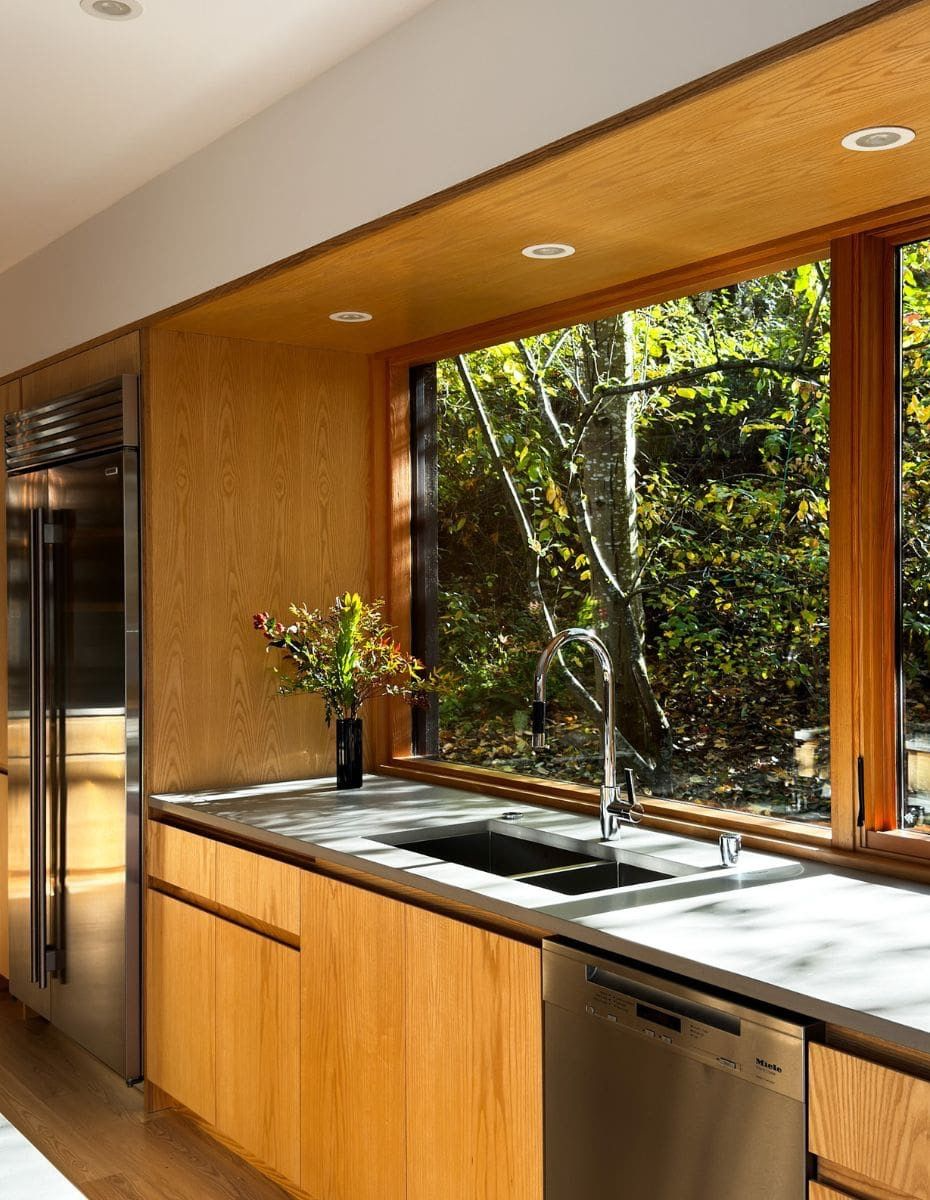
What other designer get wrong about this style.
The most common mistake: treating West Coast Modern as a material checklist rather than a cohesive system.
White oak? Check. Honed stone? Check. Brass pulls? Check. But if those elements aren't talking to each other - if the wood tone fights the stone, if the hardware scale doesn't match the cabinet profile, if the backsplash is trying too hard - the whole thing reads as "trying to be West Coast Modern" rather than actually being it.
The second mistake is ignoring the client's actual life in favour of a mood board. I've seen kitchens that look stunning in photos and are exhausting to live in - materials that require constant maintenance, storage that prioritizes aesthetics over function, open shelving that sounded romantic until someone had to dust it weekly.
West Coast Modern done right should get easier to live with over time, not harder. It should age well, clean easily, and feel like it was made for the specific person who uses it every day.
Photo Source: SHED Architecture & Design
Do I need an interior designer for West Coast Modern Kitchen?
For a cosmetic refresh - new hardware, paint, a backsplash swap - no, you probably don't.
For anything involving new cabinetry, countertops, layout changes, or material selection across multiple surfaces? Strongly yes. Here's why.
The cohesion that makes West Coast Modern work isn't accidental. It comes from someone holding all the finish decisions simultaneously - understanding how the countertop undertone reads against the cabinet paint in your specific kitchen's light, how the grout colour will affect the perceived scale of your tile, whether your flooring is going to work with the cabinetry or fight it.
HART HOUS works a la carte, which means you're not locked into a full-service engagement if you don't need it. Some clients come in for a finish selection session and leave with a material palette they can hand directly to their contractor. Others want design development, drawings, and procurement support all the way through. The level of involvement is yours to decide - the expertise is the same either way.
Explore kitchen design services at HART HOUS: https://www.harthous.com/interior-design-services
FAQ
Q: How long does a West Coast Modern kitchen renovation take in Vancouver?
From design sign-off to completion, budget 12–20 weeks for a full renovation. That includes design and finish selection (3–5 weeks), material procurement - stone slabs especially, can run 4–8 weeks - and construction (6–10 weeks depending on scope). Strata approvals for condo projects add another 2–4 weeks before construction can start.
Q: Is West Coast Modern going to feel dated in 5 years?
No - and this is one of the reasons it's worth doing properly. The style is grounded in natural materials and proportion rather than trend-driven finishes, which means it ages the way good architecture ages. Zellige tile and honed quartzite aren't going anywhere. White-on-white with subway tile already feels like a decade ago.
Q: What's the most important finish decision in a West Coast Modern kitchen?
The countertop, by a significant margin. It sets the tone for everything else. Get the stone right - the tone, the movement, the finish - and the rest of the palette tends to fall into place. Get it wrong, and you're fighting every other decision.
—Samena, HART HOUS
The Real Point
West Coast Modern is Vancouver's design language.
It fits the light, the landscape, the architecture, and the way people here actually want to live. But it's not a shortcut - it's a set of design decisions that have to work together, made by someone who understands both the aesthetic and the specific kitchen they're applying it to.
If you're planning a kitchen renovation in Vancouver and want it to feel genuinely West Coast Modern - not just a version of it - that clarity starts in the design process.
Book a discovery call with HART HOUS: https://www.harthous.com/contact