The Back Kitchen Trend Is All Over Vancouver - But Do You Actually Need One?
Every second kitchen renovation inquiry I get right now mentions a scullery. A back kitchen. A butler's pantry. A "hidden prep zone."
Whatever you want to call it, the idea is the same: a secondary kitchen tucked behind the main one, where the real cooking (and the dirty dishes, the cluttered counters, the small appliances you use daily and hate looking at) lives.
It's a genuinely good idea. It's also become a catch-all aspirational answer to problems that a better-designed main kitchen could solve for a fraction of the cost.
So let's actually talk about it.
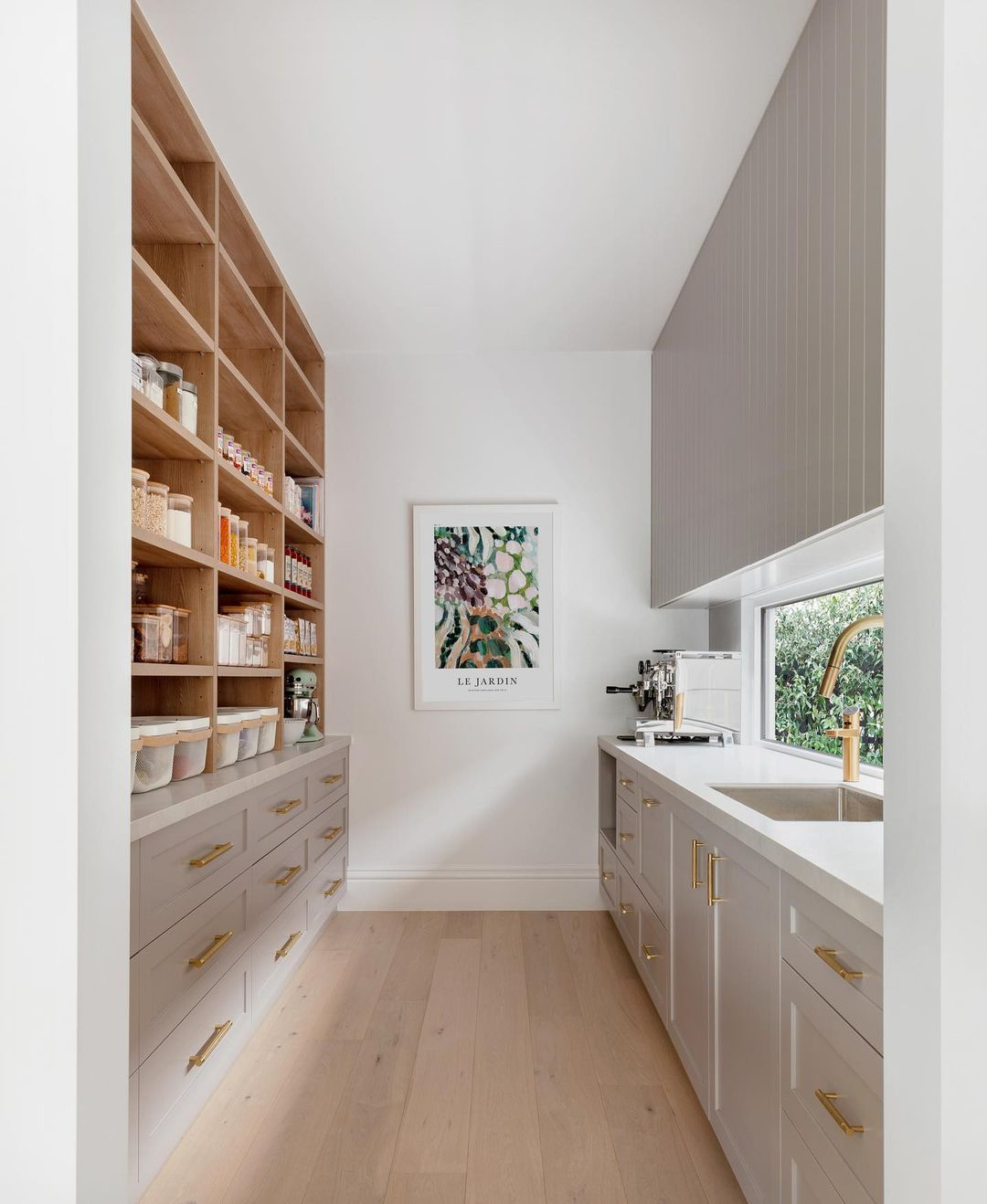
What is a back kitchen, and how is it different from a pantry?
This is where a lot of Vancouver homeowners get tripped up, and honestly, the terminology doesn't help.
A pantry is for storage. Shelf-stable food, baking supplies, the KitchenAid mixer you use twice a year. It doesn't need plumbing, a second oven, or a dishwasher. A well-designed pantry can transform a 200 sq ft kitchen into something that finally functions.
A butler's pantry is a transitional space - historically, a pass-through between kitchen and dining room used for staging, dishes, and glassware. In modern Vancouver renovations, it's often hybrid: extra counter prep space, a second sink, maybe a wine fridge or a coffee station.
A scullery or back kitchen is an actual secondary kitchen. Plumbing for a second sink (or two). A second dishwasher. Often a second oven or range. This is a full working room - and that means full renovation costs.
Understanding which one you actually need is step one. Most clients come in wanting a scullery and leave realizing a really well-executed butler's pantry gets them 90% of the result at 40% of the cost.
Photos Source: Pinterest.com
So why is everyone in Vancouver talking about sculleries right now?
Because social media is doing its thing, and because the floor plans are finally supporting it.
Vancouver's housing stock is bifurcating. On one end: older character homes in Kitsilano, Mount Pleasant, and East Van with layouts that weren't designed for open-concept living - and homeowners who are finally doing the reno they've put off for years. On the other end: new builds and major additions in West Van, Squamish, and up-Island, where square footage allows for genuine secondary spaces.
For the new builds and large additions, back kitchens genuinely make sense. When I worked on a main floor overhaul and kitchen renovation in Squamish, the floor plan had room to think differently about how a kitchen could work - and a secondary prep zone was part of that conversation. It changed how the whole space functioned for a family that actually cooks.
But that's not the average Vancouver reno. The average Vancouver reno is an East Van character home or a Kitsilano semi-detached, where the main kitchen is 120–160 square feet, and what's actually needed is a smarter layout, better storage, and a design that makes the space feel twice as big - not a whole new room bolted onto the back of it.
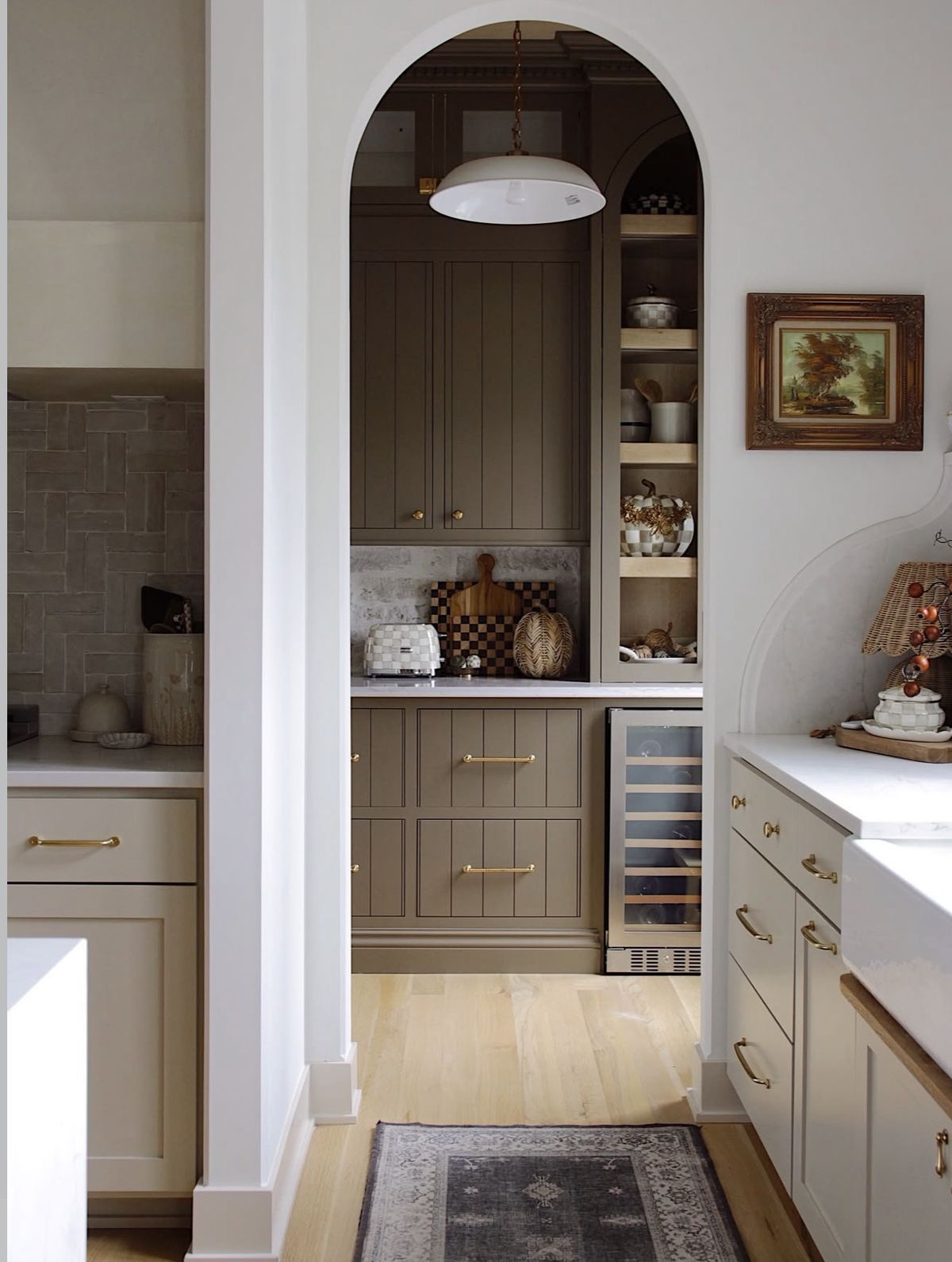
What does a back kitchen actually cost in BC?
Be prepared: this is not a cheap upgrade.
In Metro Vancouver and on the Island, adding a true scullery to an existing home typically runs $45,000–$110,000 depending on:
- Whether it's part of a larger renovation or a standalone addition
- Whether plumbing needs to be extended or relocated
- Appliance package (a second dishwasher and a prep sink is one budget; a full second range and steam oven is a different conversation)
- Finishes — and yes, even in a "hidden" kitchen, people still want it to look good
- Permit requirements, which in Vancouver and many Island municipalities add timeline and cost
Labour is the dominant cost in any BC renovation right now. Plumbers are running $100–$140/hr in Metro Van. Electricians, $95–$130/hr. If your scullery requires a structural change - moving a wall, adding load-bearing support for an addition - you're adding structural engineering and permit timelines to that bill.
A butler's pantry with a sink, prep counter, and thoughtful storage? Realistically $15,000–$30,000 in Vancouver, depending on finishes and whether you're touching plumbing.
A really well-designed pantry with no plumbing, custom cabinetry, and integrated appliance storage? $8,000–$18,000. And for a lot of kitchens, that's actually the smarter spend.
Photo Source: Pinterest.com
How much space do you actually need for a back kitchen?
This is the question most people skip, and it's the one that kills the idea in half the homes I walk through.
A functional scullery needs at minimum 80–100 square feet to be worth it - enough for countertop prep space, a sink, a dishwasher, and meaningful storage without feeling like a galley that nobody wants to work in. The pass-through flow between the main kitchen and the scullery matters too: if the traffic pattern is awkward, the space gets abandoned within six months.
In a lot of Vancouver homes - particularly condos, older bungalows, and East Van character houses - that 80–100 sq ft simply doesn't exist without a structural addition. And structural additions in Vancouver come with their own permit process, neighbourhood setback requirements, and budget implications.
That's not a no. It's a "let's look at your actual floor plan before you fall in love with a concept."
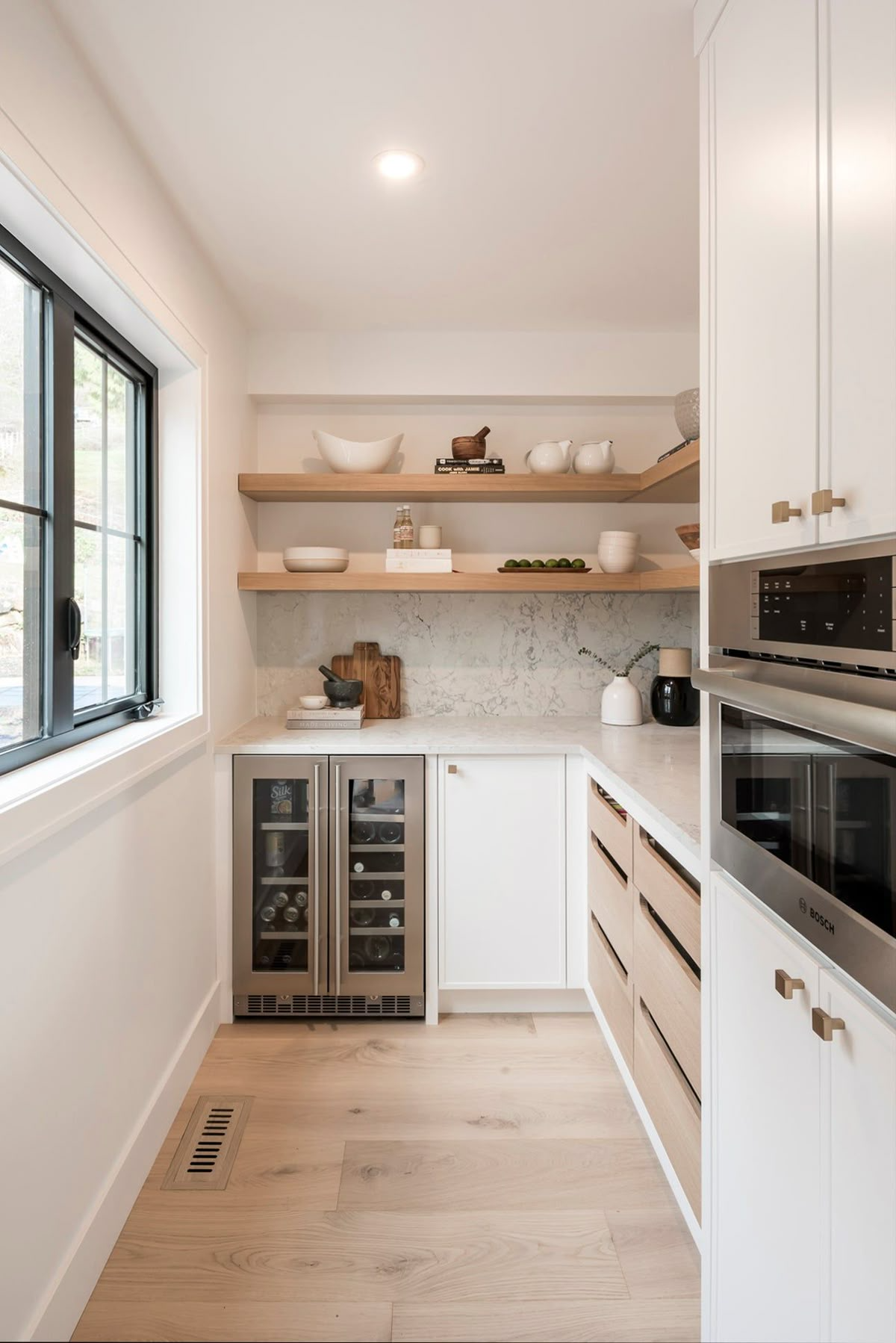
When a back kitchen is the right call.
There are absolutely projects where I'd push for a scullery or butler's pantry without hesitation:
New builds and major additions where the square footage exists and the floor plan can be designed around it from the start. In these cases, a secondary kitchen is often more cost-effective to build in during design than to retrofit later.
Homes where serious entertaining is a lifestyle, not an occasional thing. If you host dinner parties regularly and your main kitchen becomes uninhabitable while your guests are in the next room, that's a real problem a back kitchen solves.
High-end resale markets. In West Vancouver and certain pockets of the Island, a thoughtfully executed scullery does add resale value because the buyers in those markets expect it. In East Van or a condo, it's a harder ROI argument.
Families with multiple cooks. This is an underrated reason. Two people who both cook seriously, regularly, at the same time — a second prep zone isn't a luxury, it's sanity.
Photo Source: Pinterest.com
When it doesn’t make sense.
Most condos. Full stop. Even Vancouver's larger pre-sales and resale suites rarely have the layout to support a true secondary kitchen, and strata rules can restrict wet wall modifications anyway.
Character homes under 1,800 square feet, where a redesigned layout and smarter storage would accomplish the same result. I've seen more kitchens rescued by pulling out a peninsula that was blocking light and flow than by adding a room.
Projects where the budget is under $80K for the whole kitchen. If that's your number, put every dollar into the main kitchen - better layout, better materials, better lighting - and don't split your budget between two spaces.
FAQ
Q: Can I add a scullery to an existing kitchen, or is this only possible in a new build?
You can absolutely add one to an existing home - it just requires either finding the square footage within your current footprint (sometimes possible by absorbing an adjacent laundry room or mudroom) or building an addition. Both involve permits and structural work. The key is working with a designer before you talk to a contractor, so the layout question gets solved properly before anyone starts quoting you on demo.
Q: Does a scullery or butler's pantry add resale value in Vancouver?
In the right market segment, yes. West Van, certain North Shore neighbourhoods, Shaughnessy, and luxury new build markets on the Island - buyers in those price brackets expect secondary kitchen infrastructure. In East Van, Kitsilano condos, or starter-home markets, the ROI is less clear. A well-designed main kitchen will outperform an afterthought scullery every time.
Q: Do I need an interior designer for a kitchen renovation in Vancouver, or can I just work directly with a contractor?
A contractor builds what you tell them to build. A designer figures out what you should actually be building — and that includes the layout, the workflow, the storage logic, the material decisions, and how it all integrates with the rest of your home. The earlier a designer is involved, the fewer costly changes get made mid-construction. Kitchen renovations are where design errors are the most expensive to fix.
The Real Point
The scullery trend is real. But it's gotten conflated with something it isn't: a quick fix for a kitchen that was poorly designed to begin with.
If your main kitchen isn't working, a back kitchen won't fix it - it'll just give you two kitchens that don't work. The projects I've seen succeed are the ones where the main kitchen is designed properly first, and the secondary space is a genuine addition to a functional foundation.
That's a harder conversation to have than "yes, let's build a scullery." But it's the right one.
At HART HOUS, I don't just execute what sounds good on Pinterest. I look at how you actually live, what your floor plan can support, and what's going to give you the best return on your investment - whether that's a $10,000 pantry makeover or a full-scale secondary kitchen. You're not a passenger in the process. You're making informed decisions, and my job is to make sure you have the information to make them well.
If you're planning a kitchen renovation in Vancouver or on the Island and want to figure out what your kitchen actually needs, let's talk.